Common Plumbing Problems and How to Fix Them
Most household plumbing problems start small, and knowing which ones are yours to handle saves a lot of money and a few wet floors.
October 8, 2026 · 4 min read
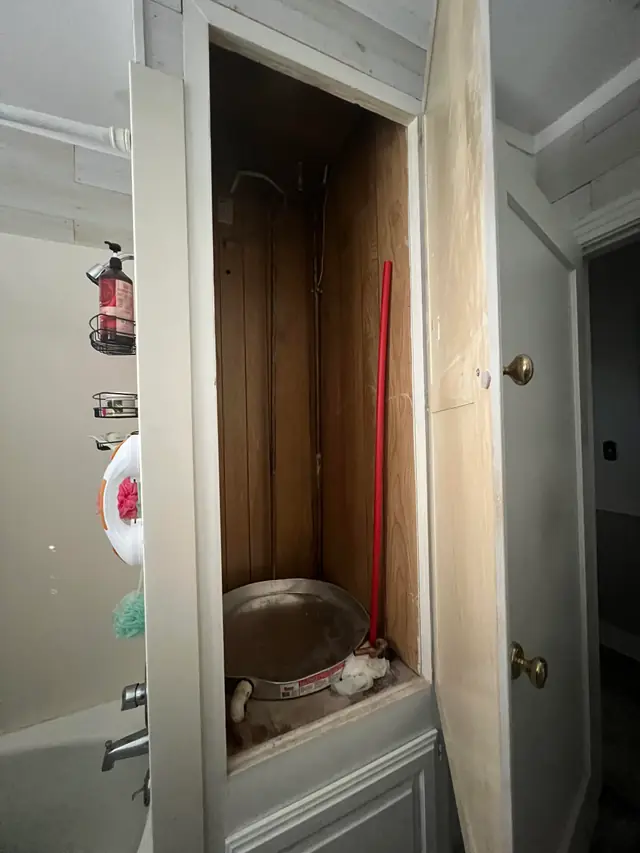
Plenty of plumbing trouble is a ten-minute job with a screwdriver. Some of it looks like that job and is actually a sign of something bigger. The skill is telling the two apart, so here are the four problems we hear about most, what you can reasonably do about each, and the point where you should put the tools down and make a call.
The dripping faucet
A drip is nearly always a worn part inside the faucet: a rubber washer in an older compression faucet, or a cartridge in a single-handle one. First, close the little shutoff valves under the sink (turn them clockwise until snug) and open the faucet to drain what is left. Plug the sink drain or lay a towel in the basin, because small screws love to disappear. Pop off the handle cap, remove the handle, and look at what is underneath. If it is a washer, take the old one to a hardware store and match it exactly. If it is a cartridge, the brand is usually stamped on the faucet body or in the manual.
Stop and call someone if the shutoff valves will not close, if they break or weep when you turn them, or if the faucet body itself is corroded. Forcing a stubborn valve is how a dripping faucet becomes a flooded cabinet.
The slow or clogged drain
Start at the top. In a bathroom sink or tub, the clog is usually hair and soap sitting a few inches below the stopper, and a cheap plastic drain strip pulls it out in one gross, satisfying handful. In a kitchen, grease and food are more likely. A plunger with a good seal works on sinks and tubs, and a hand auger can reach a little further.
Be careful with the bottle of chemical drain cleaner. It can sit in a stuck drain and cause a nasty surprise for whoever opens the trap next, and harsh products are hard on older pipes. If you have already poured some in, tell the plumber, because that changes how they handle the line.
The sign that matters most is how many drains are affected. One slow sink is a local clog. Two or three fixtures gurgling or backing up together, a toilet bubbling when you run the washing machine, or water coming up in the lowest tub in the house points to the main line, and no plunger reaches it. That is the moment to call. Artesian lists drain cleaning from $225 for a visit of one to two hours.
The toilet that will not stop running
Take the tank lid off and watch. If the water keeps trickling, the usual culprit is the flapper at the bottom, a rubber piece that goes soft or warped over the years. Press it down by hand: if the sound stops, it is not sealing. Replacement flappers are cheap, and swapping one means turning off the supply valve, flushing, unhooking the old one and clipping on the new. If the water level is too high and spilling into the overflow tube, the fill valve is the problem, and that is a straightforward part too.
Call a plumber if the toilet rocks, if water seeps at the base of the bowl, or if the supply line or shutoff leaks. Those involve the seal under the toilet or the pipes in the wall, and a half-fixed seal can rot a floor without announcing itself.
The small leak that will not quit
A leak you can see, like a drip from a trap under the sink, is often just a slip nut that has loosened. Snug it a quarter turn by hand and dry the pipe to see if it returns. The ones to take seriously are the leaks you cannot find: a water stain spreading on a ceiling, a damp patch in a wall, a floor that feels soft, or a water bill that jumped for no reason. A simple test is to shut off every tap and appliance and watch the water meter. If it moves, water is going somewhere.
Leaks like these are where the difference between treating the symptom and finding the cause really shows. Renee Elmer, who lives in a newly built home, wrote in her Google review that the original plumbers kept saying a leak was corrected, and it kept coming back. She called Artesian, and they "explained exactly what the problem was" and repaired it in a few minutes. A fix that lasts starts with locating where the water is actually coming from, which is a lot of what "fix it the first time" means in practice. Artesian lists leak repair from $155 for a one to two hour visit.
When it is time to call
Call a licensed plumber if you cannot shut the water off, if more than one drain is affected, if you see water where no pipe should be, or if you have fixed the same thing twice. If the problem is just a tired washer or a flapper, you can handle it yourself and keep the savings. For anything past that, Artesian answers the phone at (903) 849-2393, Monday through Friday, 9:00 AM to 4:30 PM.
Artesian Plumbing, LLC, (903) 849-2393
Call (903) 849-2393More articles
Why Choose Artesian Plumbing for Your Business Needs?
A restaurant, a shop and an office all ask different things of their pipes, and a good plumber starts by finding out which one you are.
Top 5 Plumbing Tips for Homeowners in East Texas
East Texas houses deal with humid summers, soaked springs and the occasional hard freeze, and a few habits handle most of it.